Wednesday, September 28, 2011

Unarresting the Arrested:FBI Profiler John Douglas on the case against Amanda Knox & Raffaele Sollecito

This is an excellent interview of FBI Profiler John Douglas conducted by journalist Krista Errickson.

The interview originally appeared on her blog, Woman on a Wire, and is now available on Ground Report (linked below).
 
From Krista: This article was originally supposed to be published for Il Messaggero. It was given to me as an assignment, after the editor and legal expert of the newspaper saw the Maxim interview with famed FBI profiler, John Douglas, in the January 2011 issue.

When the article was turned in, albeit shortened, my editor told me – “this article is too dangerous to print in Italy”. 

Hunting the Hunters

There are two kinds of hunters: the hunter that waits and the hunter that tracks. The difference of two is the complexity of their hunting techniques though both aim for the same thing; bagging the prey.

Hunters who wait prefer to lure their prey into range. This is usually the preferred method of serial killers. They watch, and wait for the chance to pounce. Hunters who track their prey, involves a more detailed approach; knowing the specific differences, patterns and behaviors of the hunted, and calculate their next moves. John Douglas is of the latter. However, he pursues a different kind of animal: serial killers. He is the investigator and legendary criminal profiler known as “The Mind Hunter”.

Click here to read Krista Errickson's  interview with John Douglas

Friday, September 16, 2011

Amanda Knox and the Architects of the Foxy Knoxy Myth

Amanda Knox and the Architects of the Foxy Knoxy Myth


Nick Pisa & Barbie Nadeau

Freedom looks to be on the horizon for Amanda Knox and Raffaele Sollecito, in Perugia, Italy. Both were convicted in 2009 for the murder of Knox’s roommate Meredith Kercher. Both have adamantly denied any involvement in the murder.

Where the original trial was a prosecutor’s dream come true, the appeal has been a complete disaster, where the prosecution has lost every key issue. The prosecution’s most important witness from the first trial admitted that he was a heroin addict on appeal and told the court, quite unashamedly, he was using heroin on the night in question----a humiliating blow to the prosecution, prompting Judge Hellmann to cut his testimony short and have him escorted out of his courtroom. 

The most damaging blow to the prosecution came from independent experts appointed by the court to review the DNA evidence. The experts’ testimony discredited the alleged murder weapon and a DNA laden bra clasp used to secure the convictions of Knox and Sollecito.  Knox’s father Curt Knox summed it up best when he told CNN “the prosecution has no case left.”

Wednesday, July 6, 2011

Want to read Italian report on why the science in the Amanda Knox case is bogus? You can

Stefano Conti and Carla Vecchiotti

Translation of the report submitted by Profs. Carla Vecchiotti and Stefano Conti of the University of Rome — La Sapienza to the Corte di Assise di Appello (Court of Appeals) of Perugia, Italy, regarding DNA evidence in the case against Amanda Knox and Raffaele Sollecito is now in progress. Vecchiotti and Conti were appointed by the presiding judge in Knox and Sollecito’s appeal trial, Claudio Pratillo Hellmann, to conduct an independent review of this evidence, which (like most of the evidence in the case) had long been seriously questioned by Knox and Sollecito’s defense teams and by outside observers.

The conclusions reached by Conti and Vecchiotti constitute a damning indictment of the investigation conducted by Italy’s Scientific Police, and in particular of the methods employed by the prosecution’s main forensic scientist, Dr. Patrizia Stefanoni. They lend official support to the already-widespread perception that Knox and Sollecito have been the victims of a scandalous miscarriage of justice.

Read the translation here: The Conti-Vecchiotti Report By komponisto

Wednesday, June 16, 2010

Why I Believe a Mafia Supergrass Will Help Clear Foxy Knoxy's Name

Luciano Aviello
Luciano Aviello, a mafia witness who wrote to the court three times saying he knows who the real killer is.
Photo originally post by the Daily Mail.

Copy of Aviello letter can be read here.

By Bob Graham

Rarely has a murder investigation been so mired in controversy, prejudice and downright incompetence as the inquiry into the death of British student Meredith Kercher.  Yet this week, three years after she was killed in her Italian digs, once more the case took a dramatic twist as a Mafia mobster emerged to add to the obfuscation and intrigue. Gangster Luciano Aviello, a jailed supergrass, claims it is not Amanda 'Foxy Knoxy' Knox and her former boyfriend, Raffaele Sollecito - who are serving jail sentences of 26 and 25 years respectively for the crime - who are guilty, but his own brother, Antonio.  In almost two years since I began investigating this murder for a documentary, I have learned to be intensely sceptical of the many 'new' developments that have occurred. And this latest is no exception.


Read rest of the article here.

Tuesday, June 8, 2010

Amanda Knox Prosecutor Tainted by 'Satanism' Case


As Meredith Kercher's killers prepare their appeal, serious questions are being asked about the man who led the case against them
By Peter Popham
One of Italy's most rambunctious legal performers, the scourge of Amanda Knox, was back in action last week.
Plump, pompous and perspiring, Giuliano Mignini, 60, may look like a character out of Dickens, but in persuading a Perugia jury to convict Knox and her Italian boyfriend Raffaele Sollecito of murdering Knox's English flatmate Meredith Kercher, the public prosecutor for the city of Perugia earned himself a reputation for steely ruthlessness in nailing his enemies.
A devout Catholic with a dim view of lax modern ways, he went on to demand that Knox serve not 26 years, as decided by the court, but life. And he was on form again this week, adding to the American student's woes by prosecuting her for slander. During the murder trial, Knox had claimed that, during an all-night grilling, a woman police officer had repeatedly slapped her. Mignini said "the good name of the Perugia police" had been attacked and asked the judge to add another six years to Knox's sentence.
Read the rest of the article here.

Friday, June 4, 2010

Amy Jenkins: Amanda Knox's plight has taken an even more absurd turn

From The Independent:


There's adding insult to injury – and there's adding an entirely spurious slander trial to a monumentally unjust 26-year prison sentence. It's not enough for the Italian authorities to have convicted Amanda Knox for murder on the basis of a) no forensic evidence, b) no motive and c) no previous; they're now going to prosecute her for slandering the police when she spoke out in her own defence.

There have been complaints about a kind of snobbery leaking out from British and American commentators about the Italian judicial system – but no amount of political correctness is going to stop me from saying that this trumped-up charge exposes the Amanda Knox case for the witch hunt it is. I'm not saying the British courts haven't overseen some terrible injustices in their time, but the fact is that if you were serving 26 years for murder in this country and you said the police hit you, you wouldn't be had up for slander.

Sunday, May 23, 2010

Motivations Against Giuliano Mignini


Comments Allowed


Back in January, Giuliano Mignini was convicted for abusing his office. Just as all criminal cases in Italy, the judge's must publish their motivations 90 days after the verdict. Last month this blog posted a summary of the charges and significance against prosecutor Mignini (which we were able to do thanks to a very informed source who has followed the case closely in Florence). You can read that summary and view the sentencing report here. As discussed in that post, the charges Mignini was convicted for are:

1.) Illegally investigating journalists who had criticized him with the "intent to harass or deter them from pursuing their legitimate profession". Specifically the court found that Mignini had targeted Italian journalists Vincenzo Tessandori, Gennaro De Stefano, and Roberto Fiasconaro, because they had criticized his investigations into the death of Narducci.

2.) Ordering an illegal investigation of the Florentine ex police chief Giuseppe De Donno.

3.) Ordering illegal investigations of two officials of the Viminale, the Ministry of the Interior in Rome, including an illegal investigation of the Roberto Sgalla, ex-director of the office of external affairs.

For the news round up from the day of Mignini's conviction, click here.

For info on the defamation suits related to this case, including Giuliano Mignini, click here.


Now the motivation document is available to the public and you can read that document embedded here. Below are both the Italian and English versions. The English version is a computer translation, so at the moment that translation is rough. For the Italian version, this is the full and unredacted copy.

Italian Version Part 1

Italian Version Part 2

English Version Part 1 (Rough Translation)

English Version Part 2 (Rough Translation)


Thursday, May 13, 2010

Slander Suit Against Amanda Knox About to Begin


by LINDA BYRON / KING 5 News
Posted on May 13, 2010 at 6:12 PM
PERUGIA, Italy – Amanda Knox, the University of Washington exchange student who is serving 26 years for murder in Italy, is about to go on trial on new charges that could extend her sentence.

Read the rest of the article here.

Tuesday, May 11, 2010

The Luminol Lies: The Case Against Amanda Knox and Raffaele Sollecito

By Steve Moore,

Luminol has been a powerful weapon of the prosecution in the Kercher murder case.  Luminol is a reliable, useful forensic tool.  But it is much like the sniper rifles I fired when on SWAT:  Used correctly, it can save the life of the innocent.  But used carelessly or incorrectly, it is brutally efficient at killing the innocent, not the guilty.  An inch or two is all that it takes to change it from savior to murderer; and that inch depends solely on the training and skill of the sniper.

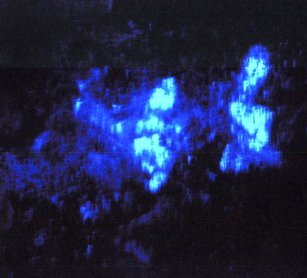
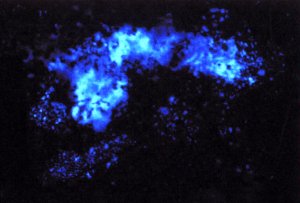
THE BLEACH CLEAN-UP LIE:  Much of the evidence presented in this case is based on luminol test results.  You may be more familiar with luminol than you think.  You know those light-sticks they sell at rock concerts and for camping?  Luminol.  The way luminal works at a crime scene is this:

1.   A mixture of luminol powder and hydrogen peroxide is mixed in a spray bottle like you buy at the grocery store.
2.  The mixture is sprayed on areas where blood (or other substances) are expected to be.
3.  The mixture reacts to many things, but one of them is the iron in hemoglobin (a component of blood) which causes the mixture to glow.  The luminol, like the light stick, has a limited fluorescent life.  In the forensics application, the glow lasts about 30 seconds.
4.  On those areas where you get a “hit”, you photograph quickly, and then test the site for indicators of what the “hit” was.  You first test for the presence of blood, then if not blood; other substances.  If it is blood, you can then conduct a DNA test. (Luminol does not disrupt blood or DNA testing).
5.  Importantly, you take a control sample from a nearby area that did NOT fluoresce, so you can be certain that your tests are valid.
6. There is no difference in the fluorescent color of luminol, no matter what substance it is reacting with.  If it reacts with blood, it is blue.  If it reacts with bleach, it is the same color of blue.

Imagine for a minute a schoolroom chalkboard with a couple of footprints drawn on it in chalk.  Now, take an eraser and erase the prints.  This is a little what a bleach-cleaned crime scene looks like under luminol examination.   A crime scene cleaned with bleach wouldn’t have footprints or fingerprints; it would have wide swaths of bleach, many times in arcs that give away the tell-tale motions of cleaning and wiping, kind of like we used to see on chalk-board erasures.  You would see luminol reactions everywhere; it would look like a huge florescent blue paint spill. 

This was not what the Policia Scientifica found at Raffaele’s apartment on November 13.  They found approximately 14 luminol ‘hits’, and no blood.  And, no indications of a cleanup.  The crime scene investigators knew on November 13 from luminol tests that the scene wasn’t cleaned with bleach.  How can we be sure that the luminol ‘hits’ were not blood?  Because finding blood would be damaging evidence, and Mignini would have used it.  How do we know that the scene wasn’t cleaned with bleach?  Because of the 14 luminol ‘hits’, and the fact that a cleanup would be damaging evidence, and Mignini would have used it.

However, in a court filing on November 28, two weeks after the tests, Prosecutor Mignini alleged that Amanda Knox and Raffaele Sollecito cleaned both the cottage and Raffaele’s apartment with bleach.  He knew that to be untrue from luminol testing.  He had known for two weeks that no cleanup occurred at Raffaele’s cottage, but still insinuated it throughout the trial—knowing it to be a lie.

I have personally reviewed video of investigators searching for bleach and bleach receipts in Raffaele’s apartment about two days after the luminol tests there.  They found two bottles of bleach.  One unopened, the other nearly full; and no receipts for bleach purchase.

QUESTION:  Why would the police look for bleach and bleach receipts if they knew that no bleach cleanup occurred, and that no blood was ever in the apartment?

ANSWER:  The only possible reason to search for bleach or bleach receipts when you know no bleach cleanup occurred, and no blood was found, is to explain the lack of blood by inferring disingenuously (lying) that bleach was used.


THE LIE ABOUT THE FOOTPRINTS IN THE HALLWAY:   It was obvious from the murder scene that no cleanup had been undertaken in Meredith’s room.  But 6 weeks after the murder, the investigators returned to the cottage and did extensive luminol testing, which further proved that no bleach clean-up occurred in the cottage, as had been stated as fact (without proof) by Mignini in court filings on November 28th—three weeks earlier. 

The prosecution in this case stated that many bare footprints of Amanda Knox were found in the house (but none in Meredith’s room)  Never was there any attempt to determine whether they were indeed Amanda’s as opposed to any of the other roommates.  Theoretically, they could have been old footprints of Meredith.  These footprints, however, were detected with luminol.  Recapping, now; after luminol detection, a forensic investigator then……

1.  Tests for blood (after all, that’s what you’re looking for), and
2.  Tests for DNA.  (If it IS blood, you want to know whose it is).

Patrizia Stafanoni of the Policia Scientifica, who perpetrated this debacle, instead tested only for DNA.  Only for DNA?  You are looking for blood and you get a hit that could be blood or any of a dozen different substances, including bleach, and you don’t test to see if you hit the jackpot?  It begs the question of incompetence or intent.  Regardless, the DNA testing showed that whatever the substance was; Meredith’s DNA was not in it. 

So even if it someone inexplicably believed it was blood, the prosecution’s own evidence proves that it could not have been the victim’s.

But Patrizia was not deterred by logic and fact.  In court, she said that she knew that the luminol stain was blood “…because of its color.”  Every trained forensic investigator (except, apparently Stefanoni) knows that luminol glows blue.  Only blue.  Not a different shade of blue for different substances…just blue.  What Stefanoni said, she knew to be false, or she was so incompetent that she should not have been allowed to destroy a crime scene. 

What could have left the footprints, then?  Among the many things that we know reacts very strongly to luminol is bleach.  Even trace amounts of bleach will light-up luminol.  Amanda told the police that she came home that morning, took a shower and then looked for roommates in the house.  Amanda was in bare feet after leaving the shower.  Showers are routinely cleaned with substances that contain bleach.  The products are sprayed on the walls, and collect and pool invisibly on the shower floor.  Therefore, it would be almost incomprehensible for her not to have minute traces of bleach substances on the soles of her feet after standing in a shower cleaned by a modern cleaning product.  Remember, in Raffaele’s apartment, there were 14 luminol ‘hits’.  And where were nine of them?  In the bathroom.  Outside the shower.  And none were blood.  I would postulate that nearly every person in America and Italy who stepped out of a sanitary shower today left luminol-detectable footprints; including Mignini and Stefanoni.

As stated above, Stefanoni never offered any evidence to prove that the luminol footprints belonged to Amanda. If we go along with the assumption by the Policia Scientifica that the luminol prints were indeed Amanda’s, the evidence would prove the following:

1.  Amanda lived at the cottage
2.  Amanda was not in the room where the murder occurred before, during or after the murder.
3.  Amanda never stepped in, or came in contact with Meredith Kercher’s blood.
4.  There was no bleach cleanup of the crime scene.
5. Amanda came in contact with a non-blood substance (probably a bleach-based cleaner), likely while taking a shower that morning, and she walked in exactly the places she told the police she walked.

In reality then, Stefanoni’s own incompetent investigation actually verifies Amanda’s account of her morning. 

FINAL THOUGHTS:  Even the ‘directed’ investigation of the Policia Scientifica could not detect a single footprint of Amanda in the murder room.  Not one.  A bunch of footprints were found in a non-blood substance outside the room, where she lived, (and having no relationship to Meredith at all), but not a single one in the murder room.  The police know a cleanup could NOT have happened. 

So the footprints were never there to begin with.  Because Amanda wasn’t there.

In the U.S., this type of prosecutorial misconduct would almost certainly have resulted in a mistrial, and likely jail time for the prosecutor.  This is not to say that the Italian judicial system is corrupt.  There is no country in the world that does not have to deal with the occasional crooked cop or rogue prosecutor.  They know how to work the system.  America had a very prominent rogue in 2006.  But in that case, the authorities dropped all charges against the innocent and jailed the prosecutor.  It’s not whether a country is going to have to deal with this kind of corruption—it is when.  Of more importance is how that country reacts when it happens.  The action a country takes determines whether it is a country under laws or a vigilante society masquerading as a civilized nation.

One of the responsibilities of the FBI is to investigate police misconduct, and it is one of the more difficult investigations an FBI Agent can be assigned.  I myself have conducted some of these investigations.  I have seen the misconduct of police and prosecutors.  But I have never personally been involved in a case where the misconduct is as egregious and obvious as the Mignini actions in Perugia.  This was not a search for truth.  This was a crusade to convict.  It reminds me of that old joke about the crooked prosecutor; “I can convict anybody,” he said, “the innocent just take more time.”

Tuesday, April 27, 2010

Amanda Knox and Raffale Sollecito: EVIDENCE COLLECTION

Evidence Collection
By, Steve Moore (Retired FBI Investigator)

The case against Amanda Knox and Raffaele Sollecito is centered on two pieces of evidence. These two pieces are a knife and a bra clasp. Their collection and interpretation defies logic. The knife (by the prosecution’s own testimony) could not have inflicted 80% of the wounds on Meredith, and the bra clasp mysteriously appeared 6 weeks into the investigation.

THE KNIFE:
From examination of the crime scene in Meredith’s room, it should have been obvious to any experienced or trained investigator that the rape and killing of Meredith Kercher was likely what is known as a “crime of passion.” These crimes are unplanned, opportunistic crimes that usually occur spontaneously.

Some of the hallmarks of these crimes are highly disorganized crime scenes, where little, if any attempt has been made to conceal evidence or hide one’s identity. No planning is evident. These are also sometimes called “clustered” crime scenes. A clustered crime scene is a location where the initial confrontation, the attack, the rape and the murder occurred at the same location, sometimes all within one room. Another hallmark of the crime of passion is that the murder weapon is almost always nearby or at hand. Whether it is a blunt object, a kitchen knife, or a pair of scissors, the assailant usually avails himself of the nearest makeshift weapon he can find within arm’s reach. Sometimes, the person carries a weapon with them habitually. But rarely if ever do they bring a weapon with intent to use it to kill. That is because the attacker hadn’t planned the crime.

Therefore, what an investigator should be looking for are any and ALL items which could inflict stabbing and/or slashing wounds. The logical thought for a crime scene analyst would be that the murder knife in this case was obtained from inside the cottage where the murder occurred. Stabbing wounds at the crime scene are so vague that simply by looking, an investigator cannot tell the difference between a letter-opener wound, a scissors wound, or a knife wound. Had I conducted the search of the cottage, I would have collected (and have in my cases collected) every single weapon of the type I could find in the house. This is “Investigations 101”. What if the murderer got a letter opener from one of the OTHER girl’s rooms, wiped it off and returned it? Do we not look in the other rooms? Of course we do.

Yet the police did not seize a single knife, letter opener, scissors, screwdriver, nail file…ANYTHING from the murder cottage for testing. Not one thing. It is inconceivable that in a cottage where four women lived, there was not a kitchen knife, or a letter opener, or scissors, or anything which might have been used. It leads one to suspect an investigation intent on proving a theory, rather than searching for truth.

Possibly the reason that nothing was seized from the cottage was that even if Meredith’s DNA was found on an object there, it could not be used to implicate Amanda. But if Meredith’s DNA was found in Raffaele’s apartment, then it would be powerful evidence.

Instead of taking anything from the cottage, the police went to Raffaele’s apartment; a five-minute walk from the cottage. A five minute walk is absolutely out of the question for the suspect in the frantic seconds a “crime of opportunity” would take. Undaunted by the sheer lack of logic, they enter his kitchen, and open a drawer to find a utencil tray. Jackpot! There were at least two knives in the drawer and From my viewing of the film taken by the crime scene analysts, both of them could have been a murder weapon. If the investigators were looking for a possible murder weapon in Raffaele's apartment then the same rules would apply. ALL items which could inflict stabbing and/or slashing wounds should have been collected. (though why they felt it would be in Raffaele’s apartment I can’t explain).

The police are staring at a gold mine of potential murder weapons. What do they do? If it had been an FBI investigation, the Agent would have scooped up every possible item in Raffaele's apartment that could inflict a stabbing and/or slashing wound. You never know until the lab reports get back. You might just get lucky and find DNA, or invisible blood or something. Every possible weapon seized gives police a better chance of finding the murder weapon! The more possible weapons, the better their chances! They would take them all and add them to the pile of potential weapons seized from the cottage, (which weren’t there because the police didn’t take them).

But in Raffaele’s apartment in Perugia, the officer chose one. One. As if he knew which one he wanted.

If the murder weapon is in the apartment and let's say as an example, you take one out of 5 possible weapons; you have an 80% chance of missing it. If you take all of them, your chances are 100% of finding it. Choosing just one possible weapon is counter-intuitive. It is unprofessional. It is negligent. It makes no sense. It absolutely devastates your chances of finding the murder weapon—if it was in that apartment to begin with. Mainly, though, it seems inconsistent with a search for the truth. I can only imagine having to explain to the United States Attorney that I left 80% of the potential evidence in the apartment. That would be an unpleasant conversation.

Now imagine their luck! That very knife blade allegedly bore a speck of DNA so infinitesimal that only two things could be determined for sure. #1: It wasn’t blood. #2. But it was Meredith’s DNA (kind of). The amount of DNA “found” was too small for legitimate testing, but that didn’t stop the authorities. The size of the sample was also too small to be admissible in reputable courts, and substantial evidence indicates that the alleged DNA might have been only in the prep equipment in the lab. It turned out to be so small that it was “consumed” in the test. Therefore, no second test, or even a test by the defense was possible. The only thing not microscopic about this find was the luck of the find. This coincidence was immense beyond words. Or odds.

Undisputed facts about the knife collected at Raffaele Sollecito’s apartment:
1. Meredith’s blood was not on it.

2. The Italian Medical Examiner who conducted Meredith’s autopsy testified that 4 of the 5 wounds found on Meredith COULD NOT HAVE BEEN INFLICTED BY THAT KNIFE.

3. The remaining wound could have been inflicted by any number of knives—including the knife that actually inflicted the stab wounds.


THE BRA CLASP
EVEN IF RAFFAELE SOLLECITO PARTICIPATED IN THE MURDER AS DESCRIBED BY THE PROSECUTION; HIS DNA WOULD NOT BE ON THE BRA CLASP.

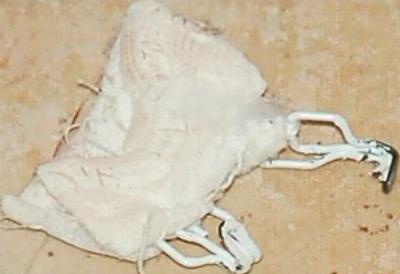
With the knife discredited, only one piece of potentially real physical evidence exists in the case. A microscopic piece of DNA found on a bra clasp that in the course of 6 weeks, had been moved multiple times, finally swept into a corner and left.

It is undisputed that after her murder, Meredith Kercher’s bra was cut off. The first cut was a vertical slice on the rear horizontal strap. This could not have been accomplished (and would be totally unnecessary) if the bra was not fastened. Next, the two shoulder straps were cut through and the body was rolled over. The bra at this point was removed from the front so that the breasts could be exposed without the need to remove her other clothing. This is not just the opinion of Steve Moore, it is also the official position of the Italian forensics experts

It is undisputed that Rudy Guede (alone) sexually abused Meredith. It is undisputed that he did so after the fatal wounds were inflicted.

Even the prosecutor’s imaginative stories about the event do not allege that Amanda Knox or Raffaele Sollecito cut Meredith’s bra off and removed her pants and panties after the murder so Rudy Guede could rape her. This left Rudy Guede to cut off the bra, as he took Meredith’s clothes off. Yet Guede’s DNA was not on the clasp! Why?

Simply because Guede cut off the bra, he didn’t unfasten it.

Guede’s DNA was not on the bra clasp because he never touched it. He didn’t have to. He cut off the back of the bra, and as he removed it from the body, the short-end of the clasp strap fell to the floor. And there it sat for six weeks. If the rapist himself cut off the bra and never touched the clasp; what possible explanation is there for Raffaele Sollecito to touch the bra clasp if he was even in the room? There is no explanation that can pass any test for logic and reason.

So why was DNA consistent with Sollecito’s found on the clasp? Why was the clasp not collected for six weeks? Is it possible that it had something to do with the complete lack of credible evidence against Sollecito and Knox to that point?

Join me at the crime scene the day after the murder. Humor me and accompany me as if it was an FBI case and I was assigned to investigate it. Assume the sublime for a second; that I think (though it defies logic) that Amanda and Raffaele were the murderers, and I had not already been relieved by my superiors for this strange, irrational theory.

I am now in Meredith’s room. One of the first things I and everyone else notice in the room , after the body, is the bloody brassiere at Meredith’s feet. I examine the bra evidence closely, without touching it, of course. And as a trained investigator, I notice that the clasp on one side of the bra is missing—physically sliced off.

This is important evidence. If it’s in another room, it could indicate that the assault started elsewhere. It MUST be found. It would be on our “to find” list, much like the ‘black box’ at a plane crash. I would instruct that nobody leave that day until the bra clasp is found, or that I could definitively state in court that it was not in that house that day.

But, the bra clasp is plainly visible on the floor in Italian forensic videos that day. As well as center-frame of a photograph on the day after the murder. It is not an ancillary piece of evidence, it is a key piece. The Policia Scientifica saw it, but didn’t pick it up. They picked up the bra, but not the clasp that was physically cut off. Possibilities:

Possibility 1: They failed to notice that the bra clasp had been cut off.

Conclusion: They are incompetent and any of their findings should be viewed with great suspicion.

Possibility 2: They didn’t think it was important.

Conclusion: They are incompetent and any of their findings should be viewed with great suspicion.

Possibility 3: They looked but could not find the bra clasp.

Conclusion: They already had the bra clasp on video. Incomprehensible. (See Conclusions 1 and 2 above).

Possibility 4: They saw it, but didn’t realize what it was.

Conclusion: They are incompetent and any of their findings should be viewed with great suspicion.
Finally, join me on one last trip. It is December 18, 2007, six weeks into the investigation, and I have returned to the crime scene to see if there is more evidence. Why would I do this? There are only two possible reasons:

1.) I’m in trouble. I have no real evidence. This is a “Hail Mary”. Every competent investigator in the WORLD knows that anything found after 6 weeks at a crime scene (if not thrown out by a judge) will be at best suspect, and at worse, cause people to question my motives, and cast doubt on any other evidence I have already submitted—such as the knife. So the only reason I would go back is desperation OR
2.) Dramatic new information has been developed, and the evidence I’m looking for is for evidence of a completely new and different suspect. This was not the case in the Kercher matter.

The Italian police “found” the bra clasp six weeks after the murder in a swept-up dust-pile.

A 2009 University of Arizona study showed that 40% of household dust is organic, primarily consisting of shed human skin cells. This number, however, goes up significantly in a colder climate where doors and windows remain closed, and more than one person lives in the house. Perugia, that fall was cold. The doors and windows in the rented home were kept closed, and four women lived there, and at least two had boyfriends who were frequent visitors. So without scientific doubt, that dust pile contained a huge percentage of the DNA of many people who had previously been in the house. And the clasp sat in that dust for weeks. The police subjected the clasp to DNA examination and found, not surprisingly, that the DNA of five different people were on the clasp.

1.) Meredith Kercher’s DNA was on the clasp. Not a surprise.
2.) Rudy Guede’s DNA was not on the clasp. Not a surprise, he CUT the bra off.
3.) DNA was reported on the bra clasp which indicated it could be in a class of DNA that included Raffaele’s DNA. Why he would ever touch the bra clasp, even if the prosecutor’s stories were true, is incomprehensible.

The prosecution, for reasons they refuse to explain, have refused to allow any independent laboratory to test the DNA found on the bra clasp.

OVERVIEW
In this case, at every significant step, the investigators’ actions were counter to and opposite of established and recognized investigative procedures and “best practices”. Every conclusion they took from evidence presented was counter to logic or reason.

For instance, at the crime scene, we have the following undisputed facts: A window was broken by a thrown rock; a grate below the broken window allowed access to the cottage, and a known burglar (who is also known to carry a knife) is present in the cottage. A female resident of the cottage, who we know to have returned about 9:00 – 9:30 p.m. is grabbed in her room, stabbed and raped. Her purse is rifled, $300 stolen, and the burglar escapes the country. These are facts.

However, from this scenario, the detectives incredibly come to the conclusion NOT that a simple (but horrible) resident-surprises-burglar, burglar-rapes-and-robs-resident case has occurred—NO. From this simple scenario, we have the tortured hypothesis of a Dean’s List exchange student from America engaging in a drug-fuelled orgy with a new boyfriend and an African stranger, and/or stumbling on her roommate being raped, and siding with the rapist, stabbing her friend and cottage-mate in the throat with a knife that isn’t in the cottage.

The detectives in this matter chose to believe that this opportunistic “clustered crime scene” killer did nothing to hide his footprints, fingerprints, DNA, or shoeprints, hair or bodily fluids, but then decided to break a window and steal cash to stage a burglary. This defies any human logic.

The book “Practical Homicide Investigation” is the veritable ‘Bible’ of homicide investigation and homicide crime scene practices. It has been so for the last several decades, and was last updated in 2006. Its author, Vernon Geberth is a retired lieutenant commander of the New York City Police Department with 40 years on the job. His last assignment was as the commanding officer of the Bronx Homicide Task Force, which handled over 400 murder investigations a year. He is a graduate of the FBI National Academy, and is arguably the most qualified homicide investigator in the United States. He continues to teach homicide investigation at the New York City Police Department. He cautions against the dangers of preconceived notions at a crime scene:

“The investigators must keep in mind that their hypothesis is provisional. If new evidence emerges that suggests a different sequence of events, they must be willing to reassess and modify their hypothesis as the new facts dictate. I have been at many different homicide scenes over the years and have seen initial theories change over and over again. The key to success in this phase of the investigation is flexibility. Practically speaking, use your common sense in this process. Do not get bogged down in theory and hypothetical speculation. Many times the answer you are looking for is right in front of your nose. The problem is that with all the events going on at the scene, it is sometimes easy to miss a simple observation.

The police and prosecutor in Perugia decided on an outcome in this case very early on. They were undaunted by evidence that repeatedly contradicted and disproved their chosen outcome. These conclusions go beyond simply stretching credibility. They lead a rational person to question one of two things: Either the competence or the motivation of the prosecutor. But you decide. Here’s a clue as to which scenario might be true: At the time of these investigations, prosecutor Mignini was fighting charges of gross misconduct which occurred during his conduct in a previous investigation, which involved illegal activities such as wiretapping innocent persons and journalists critical of them. He was subsequently convicted and sentenced to over a year in prison. He is appealing this ruling. While Mignini will most likely never spend time in jail, if his conviction is upheld, he will be removed from public office and never be allowed to serve as a prosecutor or judge again.